7 Hypnosis Fears Debunked: None of Them Should Stop You
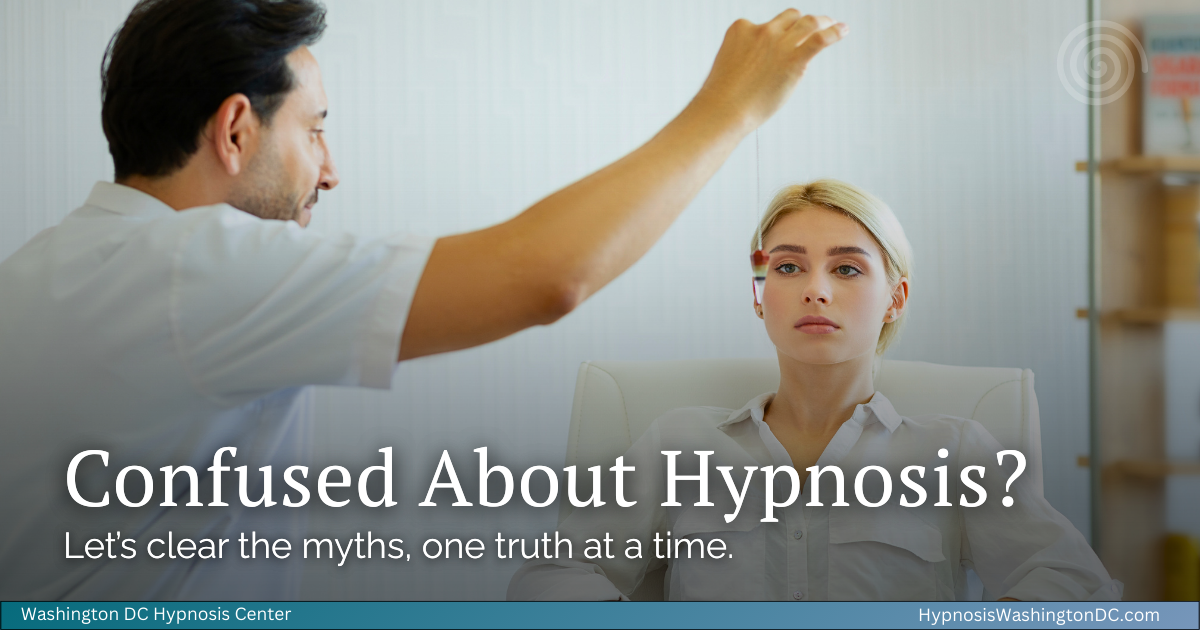
The most common fears about hypnosis are based on what people have seen in movies and stage shows, not on how real hypnosis sessions actually work. Hypnosis does not take away your control, reveal your secrets, or make you vulnerable. At the Washington DC Hypnosis Center, serving clients in Bethesda, MD, DC, VA and online, we hear these fears often and this post addresses every single one.
Hypnosis has been featured in the media and used in entertainment for decades. Maybe you have seen it in a movie that gave you chills, or attended a live stage show with family or friends where someone in the audience ended up clucking like a chicken or doing something equally absurd on stage.
If you have ever witnessed a hypnosis performance like that, you might have felt a mix of amusement, disbelief, or even secondhand embarrassment. Watching people act in ways they normally would not can leave a lasting impression. It is no wonder why so many people associate hypnosis with losing control, being manipulated, or becoming someone else’s puppet.
What you saw on stage is entertainment, not clinical hypnosis.
Despite a growing body of scientific research from top institutions showing that it is a powerful tool for anxiety relief, habit change, emotional healing, and performance enhancement, many people still hesitate to try it.
That hesitation? It is completely understandable.
For many, the uncertainty stems from outdated myths, exaggerated media portrayals, or simply not knowing what hypnosis truly is, or how it actually works.
The 7 Most Common Fears About Hypnosis Debunked
1. “I will Lose Control during hypnosis, I will Do or Say Something Embarrassing”
This is hands-down the most common fear and also one of the most misunderstood.
The reality: You are always in control during a session. You would not bark like a dog or reveal your deepest secrets, unless that is something you consciously choose to do (and you almost certainly will not).
If something does not feel right or relevant, your mind simply will not accept the suggestion. You stay aware, alert, and capable of speaking or stopping the process at any time.
Fact: According to the American Psychological Association, no one can be hypnotized against their will or made to do anything that violates their moral or ethical standards.
2. “Only Weak-Minded People Can Be Hypnotized”
This flips the truth completely. It is not about being weak, it is about being focused, imaginative, and open to the process. It often works best for people who are self-aware, curious, and capable of inner reflection.
Fact: Research consistently shows that intelligent, creative individuals are among the most responsive to hypnosis, not the most gullible.
3. “I Might Get Stuck in Hypnosis”
A popular myth. It is just that, a myth. It is simply a relaxed, focused state of awareness, much like a daydream. If the session were to end unexpectedly, you will return to your usual alert state naturally, often feeling calmer and more refreshed.
Fact: According to the Mayo Clinic, there are no recorded cases of anyone getting “stuck” in hypnosis.
4. “Hypnosis is Mind Control or Brainwashing”
This one shows up a lot in Hollywood, but not in real life. Therapeutic hypnosis is a collaborative process, not something done to you. You are not handing over your mind, you are being guided inward to a place where real, lasting change becomes easier and more natural.
Fact: Brain scans show that hypnosis activates the areas of the brain associated with attention, decision-making, and self-regulation, not submission or loss of will.


5. “I will Reveal Secrets or Say Something I Regret”
This is a common fear and completely unfounded. Hypnosis is not a truth serum. You stay fully conscious and aware during your session. If there is something you do not want to say, you will not say it, just like in any ordinary conversation.
Fact: Even though the subconscious becomes more open to suggestion, your personal boundaries remain intact.
6. “Hypnosis is Fake or Does not Really Work”
Let us clear this up: hypnosis is not a gimmick. It is a well-established therapeutic approach used in hospitals, clinics, and private practices worldwide. From easing chronic pain to breaking long-standing habits, people use it every day to create meaningful change.
Fact: Over 70,000 studies have explored hypnosis in clinical settings, and many confirm its effectiveness across a wide range of mental and physical health challenges.
7. “It is Just for Entertainment”
Sure, stage shows can be funny or wild, but it is just a show, a performance. Not a reflection of how real, clinical hypnosis works.
In practice, it is grounded, respectful, and designed to support your personal growth. It is not about laughs, it is about healing, clarity, and transformation.
Fact: It is recognized by respected organizations, including the American Medical Association and the British Psychological Society.

FAQ
Yes. When facilitated by a trained professional, hypnosis is a completely safe and natural process.
Most people do. You are in a deeply relaxed state, but still fully aware of your surroundings and what is being said.
Clients often describe it as peaceful, floaty, or deeply calming, like a guided meditation or a moment of mental quiet.
No belief required, just a willingness to be guided. Even skeptics can experience meaningful results when they stay open to the process.
Testimonials
She gave me the power to succeed.” I came to Irit wanting to make big changes, and she gave me the tools to make it happen. Kind, skilled, and results-focused. Highly recommend!
I started becoming a person who takes action. By session two, I was challenging limiting beliefs and thinking more positively. Irit helped me uncover problems I did not even know were holding me back. After three sessions, I felt empowered, clear, and recharged.
Disclaimer: These testimonials reflect the personal experiences of individual clients. Results may vary. All sessions are tailored to each person’s unique needs.
If any of these fears have been holding you back, that makes sense. Most people who try hypnosis for the first time say the same thing afterward: it was nothing like what they expected. Start with a free conversation and find out what it is actually like.