7 Common Hypnosis Myths That Are Holding You Back (And the Truth You Need to Know)

There are a lot of hypnosis myths floating around, most of them from movies. This post goes through the most common ones and what is actually true based on how sessions work in practice. Serving clients in Washington DC, Maryland, Virginia and online nationwide.
Table of Contents
- Myth 1: Hypnosis Lets Someone Control Your Mind
- Myth 2: You Could Get Stuck in Hypnosis
- Myth 3: Only Certain People Can Be Hypnotized
- Myth 4: Hypnosis Erases or Implants Memories
- Myth 5: Hypnosis Is Just Fancy Relaxation
- Myth 6: Hypnosis Works Like a Magic Wand
- Myth 7: You Have to Believe in Hypnosis for It to Work
- Final Thoughts: Hypnosis and Meditation Are Two Paths with One Destination
- Ready to Explore What Hypnosis Can Do for You?
These hypnosis myths are so common that even people who are curious about hypnosis talk themselves out of trying it.
Hypnosis has been portrayed in movies as everything from mind control to mystical trance states. No wonder these hypnosis myths take hold so easily and sometimes even fear surrounding the concept.
But real hypnosis? It is grounded, empowering, natural, and it works differently than most people expect.
Let us take a closer look at some of the most common hypnosis myths and what is actually true so that you can make an informed decision about whether hypnosis is right for you.
New to all of this? Start with a plain-English beginner’s guide to hypnosis →
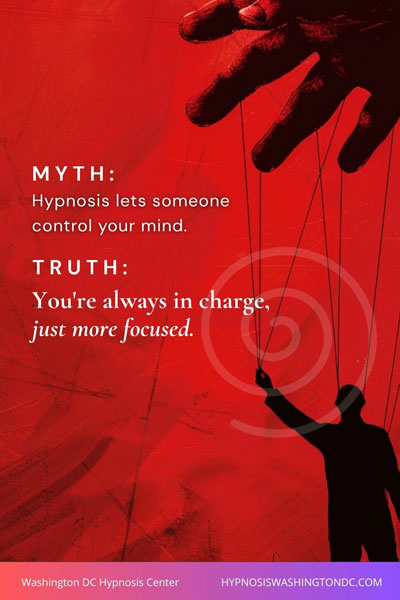



Myth 1: Hypnosis Myths About Mind Control
Truth: You are always in control.
Hypnosis is not about giving up your power. In fact, it is the opposite.
You are always fully aware during a session. You hear everything. You can respond. And you can stop at any time.
Additionally, if a suggestion does not align with your values, your subconscious simply will not accept it.
It is not about replacing your thoughts; it is about helping you reconnect to your inner wisdom and shift the patterns that no longer serve you.
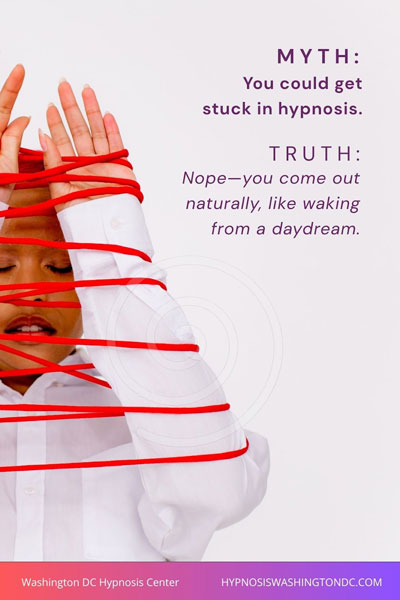
Myth 2: You Could Get Stuck in Hypnosis
Truth: That is simply not possible.
You cannot get trapped in a hypnotic state. If for any reason the session ends unexpectedly, your mind either brings you back to full awareness or allows you to drift into a natural rest.
Your subconscious mind is wired to protect you. It always knows what to do.
Still wondering about safety and what sessions feel like? Here is why hypnosis is considered safe →
Myth 3: Only Certain People Can Be Hypnotized
Truth: Most people can experience hypnosis successfully.
If you can follow simple instructions and are open to the process, you can be hypnotized.
Some people go deep quickly while others stay lightly aware. Either way, transformation does not depend on how “deep” you go; it depends on your willingness to engage with the process.
This is one of the hypnosis myths that can stops people before they even book a session.
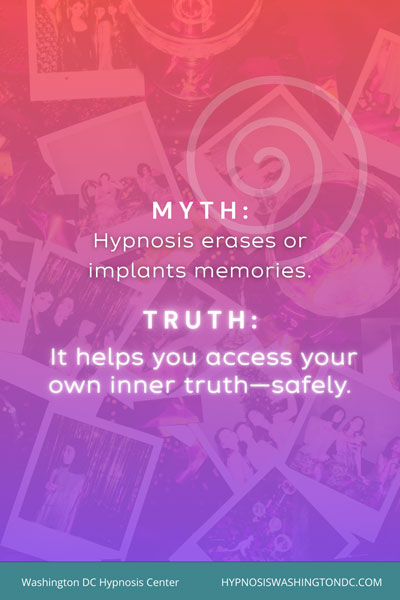
Myth 4: Hypnosis Erases or Implants Memories
Truth: Hypnosis brings clarity, not confusion.
Contrary to what you may have seen on TV, hypnosis does not create false memories or erase real ones. Instead, it helps you access insights and perspectives that are already within you. Sometimes those memories are hidden and sometimes they are forgotten, but they are always yours.
A skilled, ethical hypnotist will guide you with care and never force suggestions or manipulate your memory.
Myth 5: Hypnosis Myths About Mind Control
Truth: Relaxation is only the beginning.
Yes, most hypnosis sessions start with relaxation, but that is just the doorway.
The real work happens deeper, where old habits, emotional triggers, limiting beliefs, and subconscious stories live.
Quietly, gently, powerfully. That is where the real work happens.
For the wider research and outcomes beyond relaxation, see the science-backed benefits of hypnosis →
Myth 6: Hypnosis Works Like a Magic Wand
Truth: Real change takes participation.
Hypnosis is not a quick fix. It is a process that supports your own capacity to change.
Some people notice shifts quickly. For others, it takes a few sessions to unravel patterns that have been there for years. Each mind is different, as each person works at their own pace.
Like any personal growth tool, hypnosis works best when you are ready to be involved in your own transformation and create the change you desire.
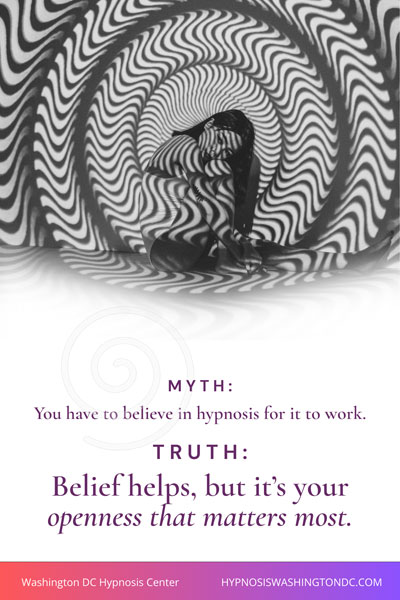
Myth 7: You Have to Believe in Hypnosis for It to Work
Truth: You do not need to “believe”, you just need to be open.
It has nothing to do with faith or religion. No spells, No magic. It is a natural brain stage that happens when you are deeply focused and relaxed.
Even people who are skeptical at first can have powerful results as long as they are willing to participate and stay curious.
Skepticism is fine. Most hypnosis myths come from people who have never actually experienced a session.
Final Thoughts on Hypnosis Myths: Two Paths with One Destination
Hypnosis shares a lot with meditation. Both invite you to turn inward, slow down, and access your deeper self.
The difference?
Where meditation invites stillness and observation, hypnosis goes a step further, it helps you reshape old patterns, update beliefs, and create meaningful change at the subconscious level.
Think of hypnosis as meditation with direction. You are not just watching your thoughts, you are choosing to gently rewrite them.
If you are seeking clarity, confidence, healing, or a new relationship with yourself, hypnosis is a powerful and supportive path forward.
Ready to Explore What Hypnosis Can Do for You?
If you are curious about how hypnosis can help with regulating emotional eating, reducing anxiety, improving self-worth, or changing old patterns that keep repeating, let us talk.
No pressure. Just a conversation to see if this work feels right for you.
Click here to schedule your free consultation.
FAQ
Hypnosis is a measurable brain state of focused attention that can be validated by EEG and fMRI research, not imagination.
Nearly everyone can. If you can follow simple instructions and stay open to the process, hypnosis will work for you. Willingness matters more than belief.
Yes. When practiced by a certified professional, hypnosis is safe, ethical, and empowering.
Most people feel calm, aware, and deeply relaxed, similar to meditation but with guided focus.
No. You are always in control and can reject any suggestion that conflicts with your values.
Yes. Online sessions are just as effective when guided properly, and many clients prefer the comfort of home.
Replace with: Washington DC Hypnosis Center serves clients in person in Bethesda, MD, DC, and VA, and online nationwide. Book a free consultation at https://hypnosiswashingtondc.com/make-appointment/
New to hypnosis? Get the facts, what to expect, and your next step.
First time? Learn how hypnosis works, feels, and how to prepare.