Still Craving Cigarettes After Quitting? This Is Why
If you have tried to quit smoking and the cravings kept coming back, quit smoking hypnosis looks at the part most cessation methods skip entirely. Sugar is added to cigarettes and when you stop smoking your brain is withdrawing from both. This post explains why and what actually helps. In person in Bethesda, MD, DC, and VA, and online nationwide.
Table of Contents
- Introduction: Why Cravings Linger
- Why Is There Sugar in Cigarettes?
- What Sugar Does to Your Body and Why Quit Smoking Hypnosis Helps
- Sugar and Smoking Addiction: A Hidden Cycle
- Is Sugar a Legal Loophole?
- Why Cravings Continue After Quit Smoking Hypnosis Sessions
- 5 Ways Quit Smoking Hypnosis Helps Break the Sugar-Nicotine Cycle
- Expect Sugar Cravings and Prepare for Them
- Skip Sugary “Quit Aids”
- Use Quit Smoking Hypnosis to Shift the Pattern
- Clear Both Triggers from Your Space
- Try EFT (Tapping) for Sudden Cravings
- Key Scientific Findings
- Final Thoughts on Quit Smoking Hypnosis
You finally made the decision to quit smoking. Maybe it is not your first time. Maybe you have already used the patch, the gum, the apps. Maybe you followed the plan, you were ready.
Why the Habit Loop Keeps Pulling You Back
But then the cravings crept in.
Not just the urge for a cigarette, but something deeper. A tension. A restlessness. A strange pull that did not go away, even when your body was still getting nicotine.
If that sounds familiar, you are not imagining it.
In fact, the addiction to cigarettes is not just chemical, it is layered.
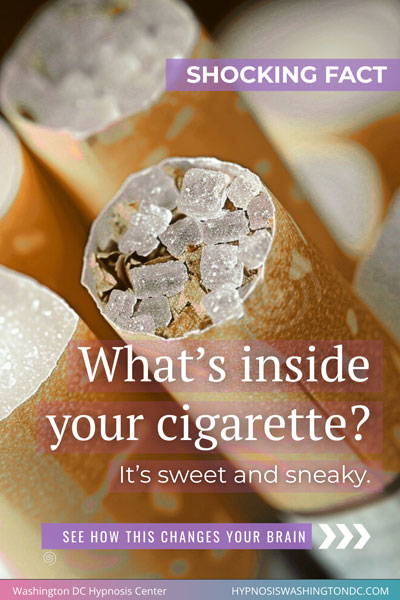
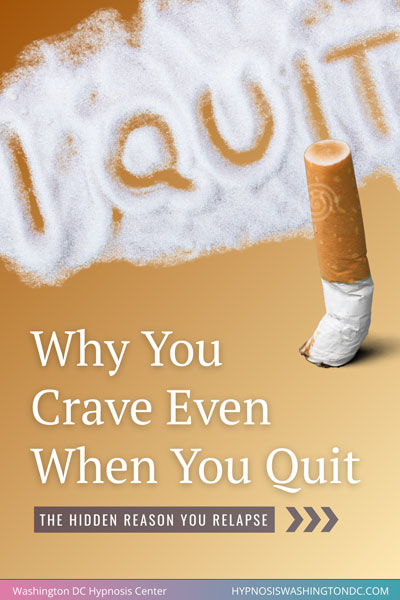
The truth is, cigarettes do not just hook you with nicotine. There is another ingredient most people never realize is there: Sugar.
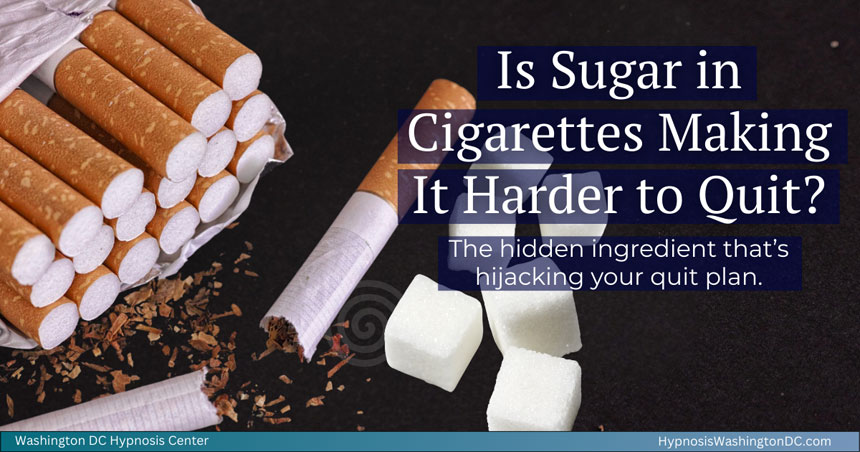
In fact, sugar is added to most cigarettes to make the smoke feel smoother, more inhalable, and more addictive. And once you understand how it works on your brain, it starts to make sense why quitting feels so much harder than expected.
If you want the plain-English science, see the Benefits of Hypnosis Backed by Research in Washington DC.
Why Is There Sugar in Cigarettes?
Cigarettes are not just dried tobacco leaves rolled in paper. They are precision-engineered products made to manipulate experience, addiction, and dependency.
Notably, sugar is one of the most common additives.
According to the World Health Organization (WHO), almost all cigarette brands globally include sugar-based additives such as:
- Sucrose
- Glucose
- Molasses
But why?
Sugar is not added to make the smoke taste sweet. Instead it serves three purposes::
- The smoke feels smoother and less harsh
- It enhances the appeal of smoking especially for new users
- It also modifies the chemistry making it easier to inhale deeply
That smoother inhale may feel easier on the lungs, but it also makes cigarettes more addictive and potentially more toxic.
What Sugar Does to Your Body and Why Quit Smoking Hypnosis Helps
As it turns out, sugar in cigarettes is not inert. When it burns, it produces acetaldehyde, a compound that interacts with nicotine in powerful, problematic ways.
Here is what happens:
1. Sugar Creates Acetaldehyde
- Acetaldehyde is a known carcinogen
- Nicotine becomes more addictive as a result
- Research has found that acetaldehyde strengthens nicotine’s effects by amplifying the brain’s dopamine system
2. Sugar Hijacks Your Dopamine System
- Both sugar and nicotine stimulate dopamine, which is your brain’s pleasure neurotransmitter
- This combination strengthens the brain’s reward circuits and reinforces cravings more intensely than nicotine would alone
3. Sugar Deepens Withdrawal Symptoms
- When you quit smoking, you may be withdrawing not only from nicotine but also from sugar
- This double withdrawal often leads to irritability, fatigue, and powerful cravings, especially in the first 72 hours
Sugar and Smoking Addiction: A Hidden Cycle
If you have ever experienced:
- Sugar cravings after quitting
- Feeling a lift or calm energy from a cigarette
- Reaching for sweets instead of cigarettes during stress
You may be stuck in a sugar-nicotine dependency loop.
Many smokers subconsciously use cigarettes as a sugar delivery system to regulate emotion, energy, or appetite. One of the most common fears of quitting is weight gain, especially among long-time smokers.
Sugar could be playing a larger role in your smoking habit than you realize.
Some researchers now argue that cigarettes function as a dual-addiction system, delivering both nicotine and sugar-triggered stimulation in one hit.
Is Sugar the Legal Loophole Exploited by Tobacco Companies?
Despite its effects, sugar is not regulated like nicotine. It is often labeled in vague terms such as “natural flavoring” or “processing aid.”
- Most cigarette labels do not disclose sugar content
- Some brands may contain up to 20% sugar by weight, which is a startling amount when you consider how often smokers inhale
The National Cancer Institute’s Tobacco Control Research Branch has raised concerns about the strategic use of sugar additives to intensify addiction, especially among new and younger users.






Quit Smoking Hypnosis Program: Why Nicotine Is Only Half the Story
Quit smoking hypnosis sessions at Washington DC Hypnosis Center are structured to work with both the nicotine pattern and the sugar dependency underneath it. Most cessation methods address one layer. This approach addresses both, at the subconscious level where both habits were formed.
Understanding the sugar link changes the quitting equation.
By now you know that you are not just battling a habit. You are untangling a highly engineered cycle designed to keep you dependent, not just physically, but emotionally.
That is why nicotine replacement alone often does not feel like enough.
Your body might be getting the nicotine, but your brain is still craving the sugar-fueled dopamine.
Want help addressing both nicotine and sugar triggers?
Quit Smoking Hypnosis Program –>
Break Free from Nicotine + Sugar Cravings
5 Ways Quit Smoking Hypnosis Helps Break the Sugar-Nicotine Cycle
-
1. Expect Sugar Cravings and Prepare for Them Keep fruit, herbal teas, or crunchy protein snacks on hand. Do not judge your cravings. Just redirect them.
2. Skip Sugary “Quit Aids” Gum and candy might seem helpful, but they can reinforce the same sugar-nicotine dependency loop. Focus on stabilizing foods instead: protein, fiber, or slow-burning carbs.
3. Use Quit Smoking Hypnosis to Shift the Pattern Hypnosis helps calm the nervous system and rewire the emotional reflexes that tie sugar and smoking together. For many clients, it makes quitting feel less like a fight and more like a release.
Ready to quit for good? Learn how to Prepare for Your First Quit Smoking Hypnosis Session in DC, Maryland, Virginia →
4. Clear Both Triggers from Your Space Do not just throw away cigarettes. Also clear out candy, soda, and other go-to sugar crutches. Your environment cues your brain, so change the cues.
5. Try EFT (Tapping) for Sudden Cravings EFT tapping is a body-based technique that interrupts the stress cycle and reduces cravings fast. You can use it anywhere: before a meeting, after a hard moment, or when urges hit unexpectedly.
Get Hypnosis Support in DC, MD, VA or Online
Start Your Quit-Smoking Journey
You Are Not Failing. You Are Fighting Two Fronts.
Quitting smoking is hard. But not because you are weak.
It is hard because you are fighting a multi-layered chemical system designed to keep you hooked. And once you understand that sugar plays a role, everything starts to make more sense.
The good news is that when you treat both layers of nicotine and sugar, you do not just quit. You take your power back.
You are the one in control.
Learn How Our Washington DC Quit-Smoking Hypnosis Program Addresses Both Nicotine and Sugar Triggers
Key Scientific Findings
Why the Science Matters for Quit Smoking Hypnosis
1. Sugar Added to Cigarettes Increases Acetaldehyde, Boosting Addiction
- Tobacco manufacturers frequently include sugar additives in cigarettes, including sucrose and invert (sweeter) sugar.
- When burned, sugar produces acetaldehyde, a known carcinogen that amplifies nicotine’s addictive potential.
- Acetaldehyde stimulates dopaminergic reward pathways, making cigarettes more reinforcing and habit-forming.
- The interaction between nicotine and acetaldehyde results in a synergistic increase in brain reward signaling, thereby complicating nicotine cessation.
2. Sugar Withdrawal Mimics Nicotine Withdrawal Symptoms Although there is less direct study on sugar withdrawal in smokers, research shows:
- Sugar triggers the same dopamine-reward pathways as drugs like nicotine and alcohol.
- Quitting both substances at once can intensify symptoms like fatigue, mood swings, cravings, and irritability.
- This dual withdrawal may confuse smokers, making them think nicotine replacement is not working when in fact, sugar withdrawal is also playing a role.
Sources:
- Rada et al., 2005 – Behavioral Brain Research
- Lenoir et al., 2007 – PLOS ONE
3. Weight Gain After Quitting Smoking Often Tied to Sugar Cravings
- Post-cessation weight gain is commonly attributed to increased caloric intake and preference for sweet foods.
- Smokers often substitute sugar for nicotine as a form of emotional or oral compensation.
- The dopamine deficiency during withdrawal increases cravings for sugar-rich food. Weight Loss and Emotional Eating with Hypnosis in Washington DC, Virginia or Maryland.
Sources:
- Filozof et al., 2004 – Obesity Reviews
- Yeh et al., 2010 – Appetite
4. The Tobacco Industry Knows About Sugar’s Role in Addiction
- Internal documents from tobacco companies (e.g., RJ Reynolds) show that sugar was strategically used in cigarettes to:
- Enhance inhalability
- Reduce harshness
- Increase appeal to new users
- These documents imply a deliberate effort to foster dual-addiction through sugar and nicotine synergy.
Source:
This is why nicotine replacement alone often does not feel like enough. See how our Quit Smoking Hypnosis Program in Washington DC, Maryland, and Virginia helps you tackle both nicotine and sugar triggers at the root.
FAQ
Yes. Many cigarette brands contain sugar additives, sometimes making up to 20% of the tobacco blend. When burned, sugar produces acetaldehyde, which strengthens nicotine addictive grip. This explains why so many smokers in Washington DC, Maryland, and Virginia report powerful cravings even after using nicotine replacement alone.
Sugar and nicotine both stimulate dopamine, your brain “feel-good” chemical. When you quit, you are often experiencing withdrawal from both substances. That is why many people reach for candy or soda after quitting. Learn how hypnosis rewires cravings at the root →
Hypnosis does not just target nicotine. It also works on the subconscious triggers behind sugar cravings. Clients who address both the nicotine and sugar patterns find it easier to quit smoking without trading one craving for another.
Weight gain after quitting often comes from substituting sugar for cigarettes. Hypnosis helps prevent this by addressing the subconscious patterns that fuel both habits. See how hypnosis supports weight loss and emotional eating.
Patches and gum only address nicotine withdrawal. They do not solve the sugar-triggered dopamine loop engineered by cigarette additives. That is why many people feel restless or unsatisfied even while using NRT. See how our Quit-Smoking Hypnosis Program tackles both layers →
Some clients notice a shift after the first session. Results vary depending on how long the pattern has been in place.
Yes. Online sessions via Zoom are available worldwide. Many of our clients from DC, Maryland, and Virginia choose virtual hypnosis and find it just as effective as in-person sessions, often more comfortable because they can quit from their own home.
Yes. Our integrated Quit-Smoking Hypnosis Program addresses both nicotine and sugar withdrawal, while also retraining your relationship with food. This helps prevent post-quitting weight gain and supports more lasting results..
That is one of the most common things clients say before their first session. Hypnosis works differently because it addresses the subconscious patterns behind the habit, not just the behavior. Some clients who had no success with patches, gum or medication do well with hypnosis.
A lot of clients say that before their first session. Hypnosis requires your participation, not your belief. If you can sit in a chair and follow along, that is all it takes.
Ready to Quit Smoking Without Falling Into the Sugar Trap?
You do not have to trade one craving for another. You do not need to choose between smoking and gaining weight. Some clients come in having tried patches, gum, and willpower. When those only address nicotine, the sugar pattern stays active and the cravings keep coming.
The quit smoking hypnosis program works on both layers at the same time: the nicotine pattern and the sugar loop underneath it.
Schedule your free consultation today.
Let us build a Quit Smoking Hypnosis Plan that addresses both patterns at the root, frees your body, and rewires your brain gently. When the subconscious shifts, the craving loses its grip. That is what the work is for.
Quit for Good with Washington DC Hypnosis Center
Cravings aren’t about nicotine, they’re about subconscious patterns. See how hypnosis rewires them for good.